Do sport and politics go together ?
Here's a subject we've been wanting to cover for a while now. In the current climate, it's a question that's come up a lot: should sport and politics be mixed? Although athletes usually defend themselves by pointing out that they are not the ones making the decisions, their voice often reaches a large majority of people. Yet they do everything they can to avoid being used politically and to avoid taking sides. On the other hand, politicians go to great lengths not to be associated with athletes, except in the event of a national victory, otherwise they are rarely seen mentioning sport.
To the question "Should politics be involved in sporting decisions?" 100% of voters answered "No". And that's also the answer we would have given at first sight. However, the links between sport and politics are so close that it is very difficult to avoid including one of them in the decision-making process of the other.
In Egypt, one club is known for its political side, Al Ahly - the National. Created to confront the English presence, its supporters are known for their participation in the 2011 revolution. Although they represent Egyptian youth and are present in their own right rather than as football fans, the ultras have managed to combine their knowledge as fans, with their singing (so as not to point out the various violent movements) and their organisation. If in this case it is not sport that is directly linked to politics, it is its most fervent players who are. Subsequently, with the Port Said tragedy and the loss of confidence in the ability to manage supporters' groups, it was at sporting level that politics had an impact. Mainly for security reasons, the football championship was suspended, with the direct result (or not) of an incredible drop in the quality of Africa's most successful nation. Despite the presence of some great players, such as Mohamed Salah, Egypt had to wait until 2017 for any semblance of results. Subsequently, the hosting of the African Cup of Nations on home soil in 2019 marked a "return to normality" for this giant of the continent. If you look at the Pharaohs' football results, they go hand in hand with political stability. The same is often true of countries affected by political crisis. Football may go beyond the realms of sport, but footballers often go beyond the doors of politics. Many of them use their messages and their influence to try and change things in their respective countries, and not just through football.
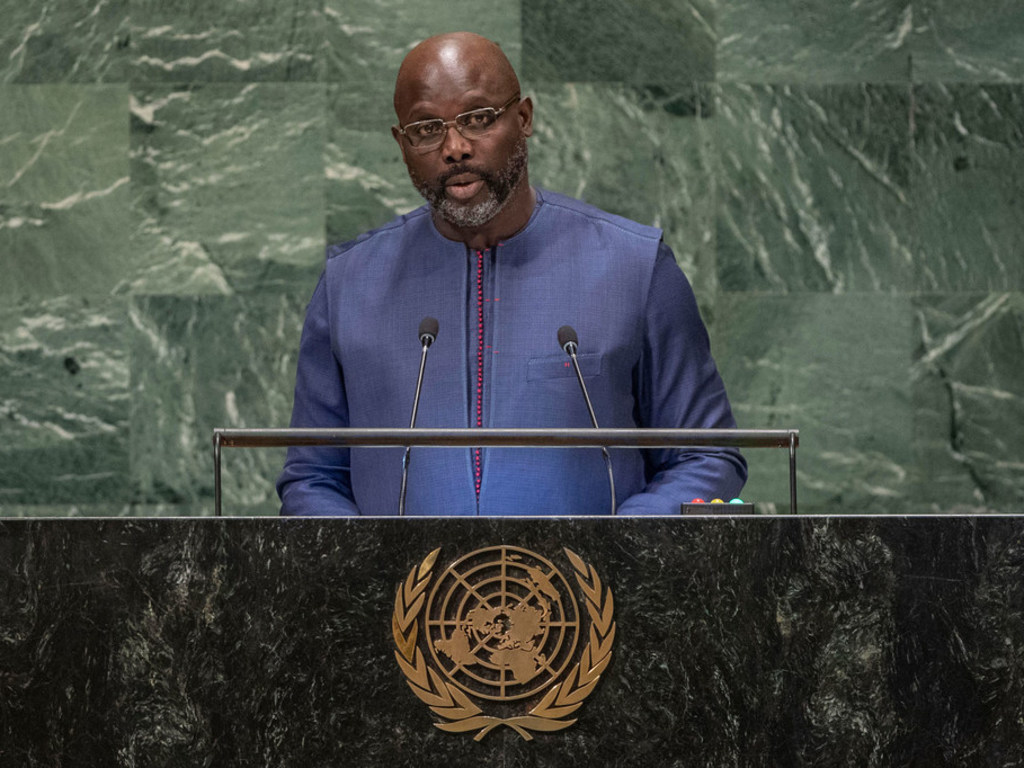
However, for a former sportsman to rise to the presidential position is a unique thing, and that is what George Weah has managed to do after several attempts. The only winner of the Ballon d'Or in Africa, the Liberian has risen to the highest office in the land. Not without difficulty, and with a background of around ten years in Liberian politics, the former PSG player has had to adapt to the changes his country has undergone. Now at the head of a rapidly growing country, he has succeeded in enhancing the image of the footballer, and an African one at that. While it is often in Africa that players allow themselves to become involved in politics, in Europe a tennis player who retired last year has set her sights on becoming Chancellor of Germany. Andrea Petkovic, who we have already talked about on our Instagram page, is an example of the match between sport and politics. Having obtained a degree in political science during her professional career, the player has always aimed to create her own political party, in order to represent young people, but also people from immigrant backgrounds.
The core issue of politics is representation, and this can also be an important issue for sport. How can you compete if you are not represented? How do non-represented people take part in competitions? This was one of the Olympic Committee's questions for a long time, and an answer has now been found. In 2016, for the first time, a team of refugees is taking part in the Olympic Games. Refugee status has existed since 1951, so athletes who have left their country have had to obtain a new nationality in order to practise their sport at a high level. This meant representing a country that was not their own, or trying from abroad to represent a country that they had left behind. It's a difficult choice in both cases, even if every refugee hopes in the long term to be able to return to their country, and it's understandable that some of them don't want to take part under the colours of a country that forced them to flee. A difficult choice in both cases, Even if every refugee hopes in the long term to be able to return to their country, it is understandable that some of them do not want to take part under the colours of a country that forced them to flee. This initiative set up in Rio therefore enables athletes to represent themselves and their cause, to be able to practise their profession while maintaining their political stance. The choice to take part in the refugee team is in itself an extremely political choice. Despite this, many choose to represent their host country, like Nadia Nadim, one of the most popular in this case. Nadim has long been the face of refugee sport, considered a model athlete because of her history, the sport she plays and her university career, and she is now joined by many other athletes.
,aspect=fill)
Let's not stray too far from the subject. In this first part we have talked about how sport and athletes are intertwined with politics, and now we are going to look at how politics can influence sport and change the course of certain competitions.
It's hard not to mention the football competition we've been looking forward to this year, the Under-20 World Cup, which was due to take place at the magnificent Jakarta International Stadium, and which we covered in an article entitled Indonesia, a future giant. However, following the political stance taken by the Indonesian Football Association regarding Israel's participation in the competition, a subject long debated in Indonesia, the World Cup was finally played in Argentina, with the former host country banned from taking part.
It was enough to make the workers at the stadium and the tourist office, who had already put everything in place 3 months before the competition, cringe. (Israel leaves with the 3rd place medal) This is not a new situation, however, as Israel's presence at various competitions often raises a number of questions. For most sports, this is quickly swept under the carpet, with the country taking part in European competitions, where it is recognised by all. But what about on a global scale? You have to realise that many countries in conflict, or not recognised by some, cannot compete against a handful of nations. For example, Azerbaijan and Armenia cannot compete against each other in most team sports. At individual level, it's a different matter, as it's a personal choice that carries the risk of disqualification, which few athletes risk. We saw this with the banning of Russian teams and athletes at the start of the conflict that is still affecting Ukraine today. This may bring us back to representation, with many Russian and Belarusian players not representing any nation in their respective competitions.
But we are going to focus instead on the decisions taken by the authorities as a result of the nation's political positions. To stay with the case of the current conflict which is having the greatest impact on Europe, the Latvian tennis federation decided at the start of the year to refuse to help its athletes taking part in competitions featuring Russian players. Knowing who the country's star is, Jelena Ostapenko, and her affinity with many Russian players on the circuit, it would seem that this action is totally targeted. Be that as it may, it is the result of a historical and political context that has nothing to do with sport in the first place. How do we deal with this today? Can you imagine being a sportsman and having a team-mate from the country with which your nation is in conflict? Do you have to stop practising your profession? Should we publicly state our position on the current conflict? And what about civil wars? How should a country be organised when ethnic groups and other political opponents can't get along? Is it preferable to set aside the political aspect that sport can have, and reject the role of ambassador that sportsmen and women are given because of their popularity? That, at any rate, is what the Fédération Internationale d'Automobile has decided, by refusing all distinctive political signs from its drivers. From now on, it will be impossible to see any political message worn by a driver in the paddock, and this comes after Sebastian Vettel's departure, which is good timing on the part of the FIA. However, the athletes can still contest and face a heavy fine, but in a sport that is mainly promoted in countries with controversial politics, it is difficult to make a choice as to the policy to adopt. Denying the grand prix to Russians, following the invasion of Ukraine, as well as the participation of drivers with the nationality of the biggest country in the world, is completely understandable, but adding the race to Jeddah despite the situation in Yemen shows the hypocrisy of the FIA. It also shows just how difficult the link between politics and sport is, since it also has to keep up with public opinion and funding. Certain elements are premium, and this makes the political actions of sportsmen and women all the more courageous, but the question arises as to whether this is really their role...
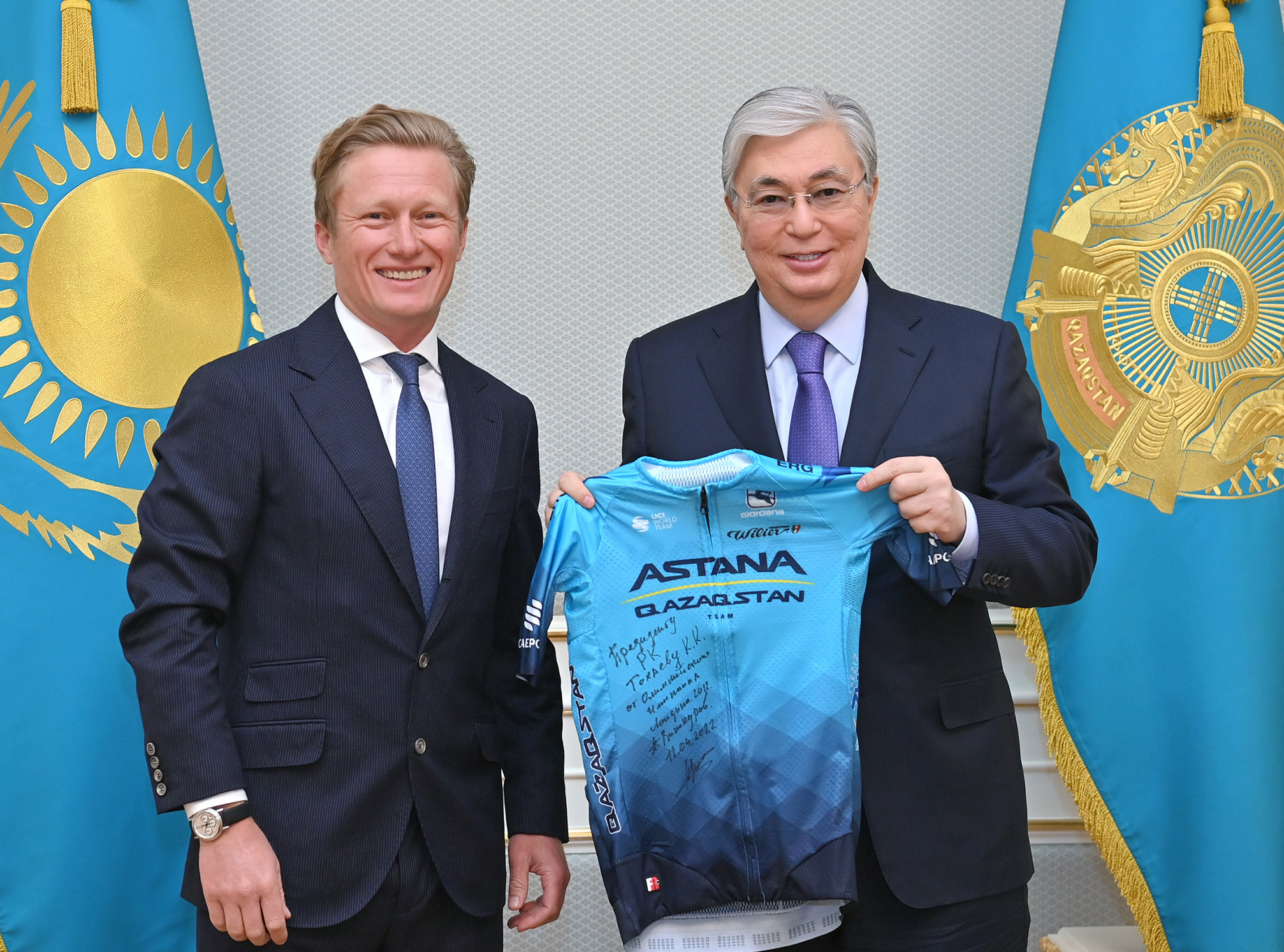
We have looked at the close links between political acts and sport, sporting events and politics, but we could also have focused on the use of politics in sport. Many governments, heads of state and other dignitaries use sport to enhance their image. Good old soft power, the workings of which we already know well. The most recent example is the arrival of Saudi Arabia on the football market. Accompanied by the Saudi Arabian investment fund, and including in their contracts a promotion of the country by the players in the manner of influencers, Saudi Arabia is a perfect example of the association between sport and politics. The question goes beyond ethics, which is a matter for each individual, to the sporting policy behind it. This is also one of the major subjects we could have dealt with, but to do so would have required a plural analysis with disparate singularities. To mention just one country, Kazakhstan is one of the best at combining sports policy with political image. With many Russian athletes taking Kazakh nationality, but also the support of the President for every result ( for example, Shavkat was welcomed as a champion after a victory over a top 10 fighter in the UFC). We can see that sports policy is to multiply the number of athletes in the country. All these things confirm that it is impossible to do one without the other, and they also show how important it is for those involved in sport to take an interest in politics, and vice versa, for those involved in politics to take an interest in sport.